




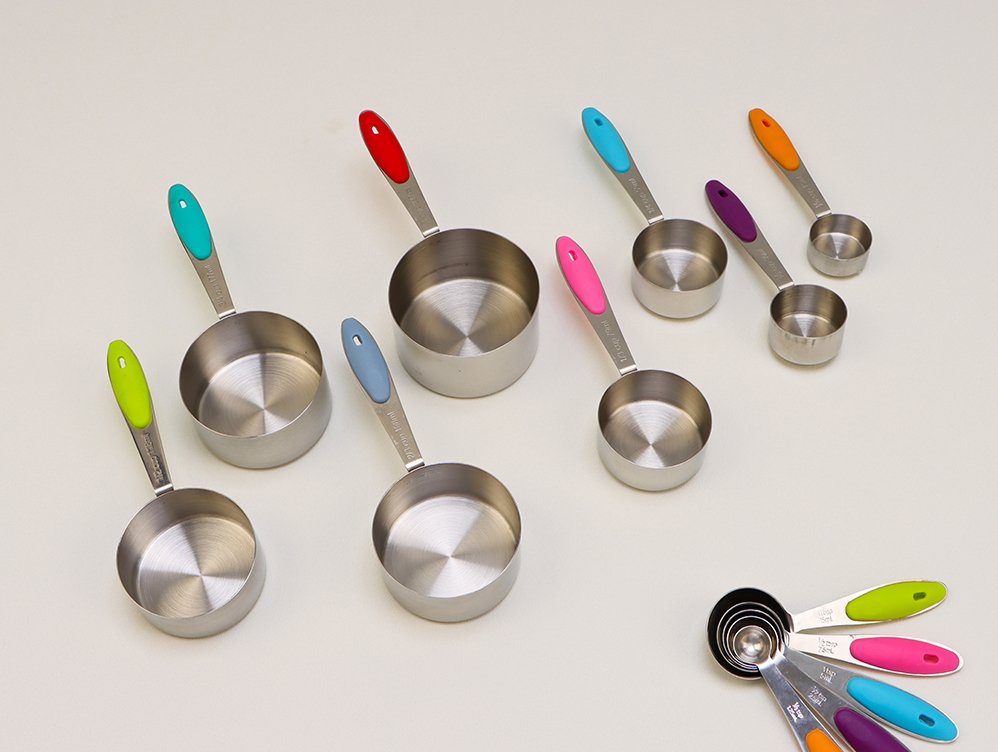
Note: This article only discusses the stainless steel kitchenware products.
Material
For most stainless steel products, the main factor is material. There are so many stainless steel grades. And the prices could be big different. Below is the sheet for the most common stainless steel types of kitchenware products (except kitchen knives).
| Stainless steel grade | Feature |
| 201 | Better corrosion resistance than 430/420J2/410 (but less than 304), Non-magnetic (usually), Good formability and weldability, Work-hardens quickly |
| 410 | Lower corrosion resistance than 430 Can be hardened by heat treatment Magnetic Moderate weldability (preheating required) |
| 420J2 | Moderate corrosion resistance (weaker than 430) High hardness (can be heat-treated) Magnetic Poor weldability |
| 430 (18/0) | Good corrosion resistance (but inferior to 304), Magnetic, Poor weldability, Moderate strength, good formability |
| 2Cr13 | can be heat-treated (quenching & tempering) for enhanced hardness. have moderate corrosion resistance |
| 2Cr14 | can be heat-treated (quenching & tempering) for enhanced hardness. corrosion resistance slightly higher than 2Cr13 |
| 304 (18/8) | Excellent corrosion resistance. Good formability and durability. Affordable and widely available. |
| 316 (18/10) | Higher corrosion resistance (especially against salt and acids). More durable in harsh conditions (often used in marine environments). |
• For corrosion resistance: 316 > 304 > 201 > 430 ≈ 2Cr14 > 410 ≈ 2Cr13 ≈ 420J2
• For cost: 316 > 304 > 420J2 ≈ 201 > 430 > 2Cr14 > 410 ≈ 2Cr13
| 316 | 304 | 420J2 | 201 | 430 | 2Cr14 | 410 | 2Cr13 | |
|---|---|---|---|---|---|---|---|---|
| Cost (RMB/t) | 26000 | 13300 | 8320 | 8300 | 8200 | 8100 | 7900 | 7800 |
To summarize, the better the corrosion resistance of stainless steel material, the higher the cost. Due to budget constraints, we may need to compromise on corrosion resistance performance. When selecting suppliers for our products, it is essential to consider the materials they use, as this can impact both the final price and the user experience. It is not reflected in the photo.
Note: We know that stainless steel 304 is non-magnetic. We also need to be aware that stainless steel 210 is also non-magnetic.
Polishing
Polishing is essential for many stainless steel products, as it significantly impacts both the appearance and price. This includes the visible polishing of surfaces as well as the polishing of edges.
There are three main types of surface polishing: tumble polishing, mirror polishing, and matte polishing. Refer to Picture 1 for examples: the top showcases matte polishing, the middle displays mirror polishing, and the bottom illustrates tumble polishing.
Mirror polishing comes in several grades, as shown in Picture 2. Generally, the shinier the finish, the costlier it becomes. In Picture 3, the shiny finish represents 500 grit, while the rougher finish is 400 grit. Typically, a matte finish is more expensive than a mirror finish.
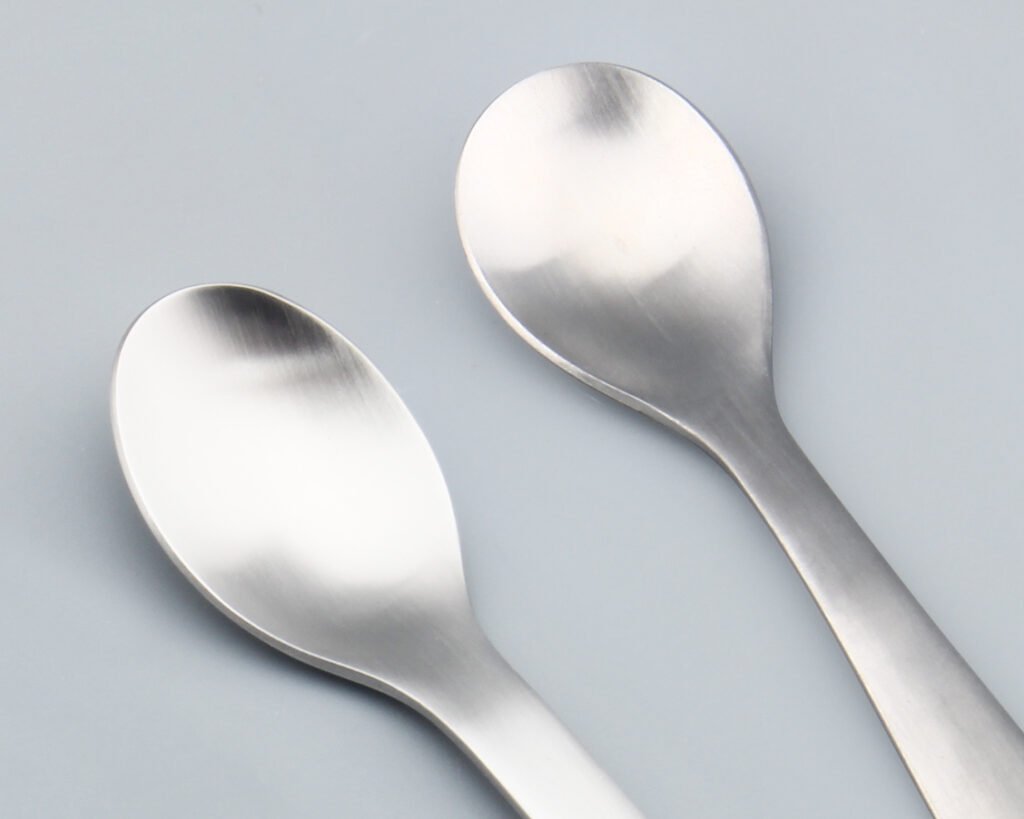
Polishing the edges is also important as it helps eliminate sharp edges, enhancing safety. The edges can be treated in different ways (see Picture 4). In the image, the left edge looks rougher than the right edge, although this difference may not be immediately noticeable in the photo. However, when you touch the samples, you’ll feel the contrast. The rougher edge may feel slightly sharp.
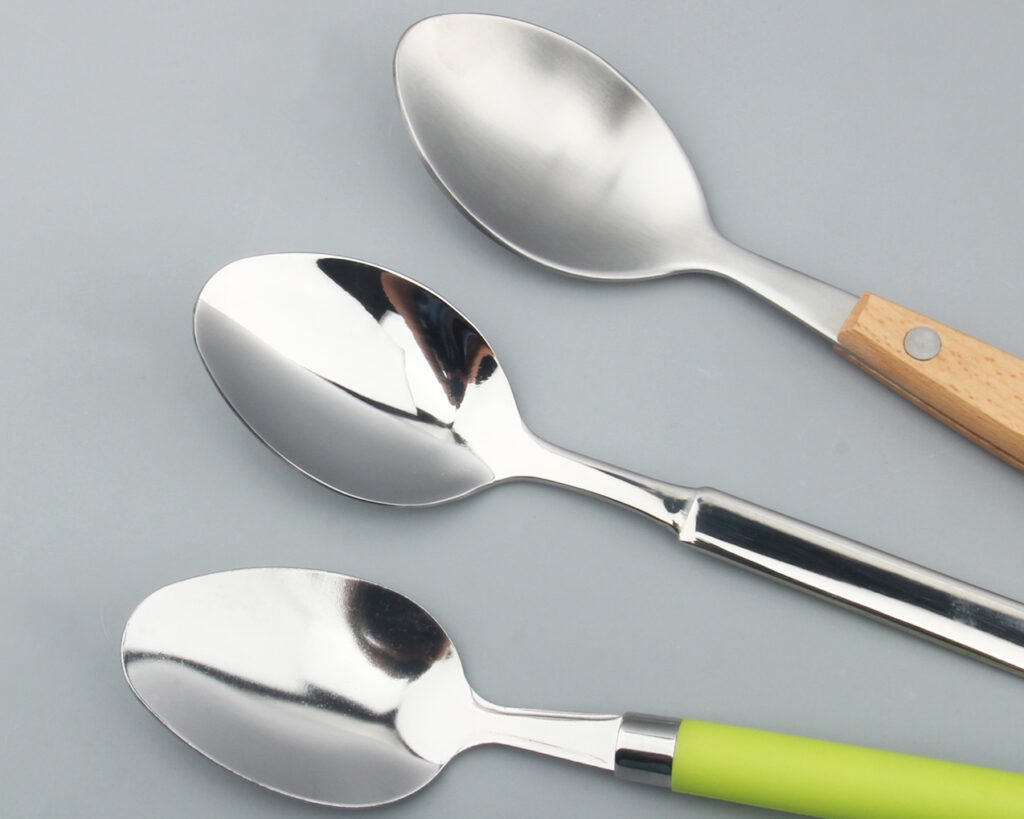
- Picture 1 Different polishing
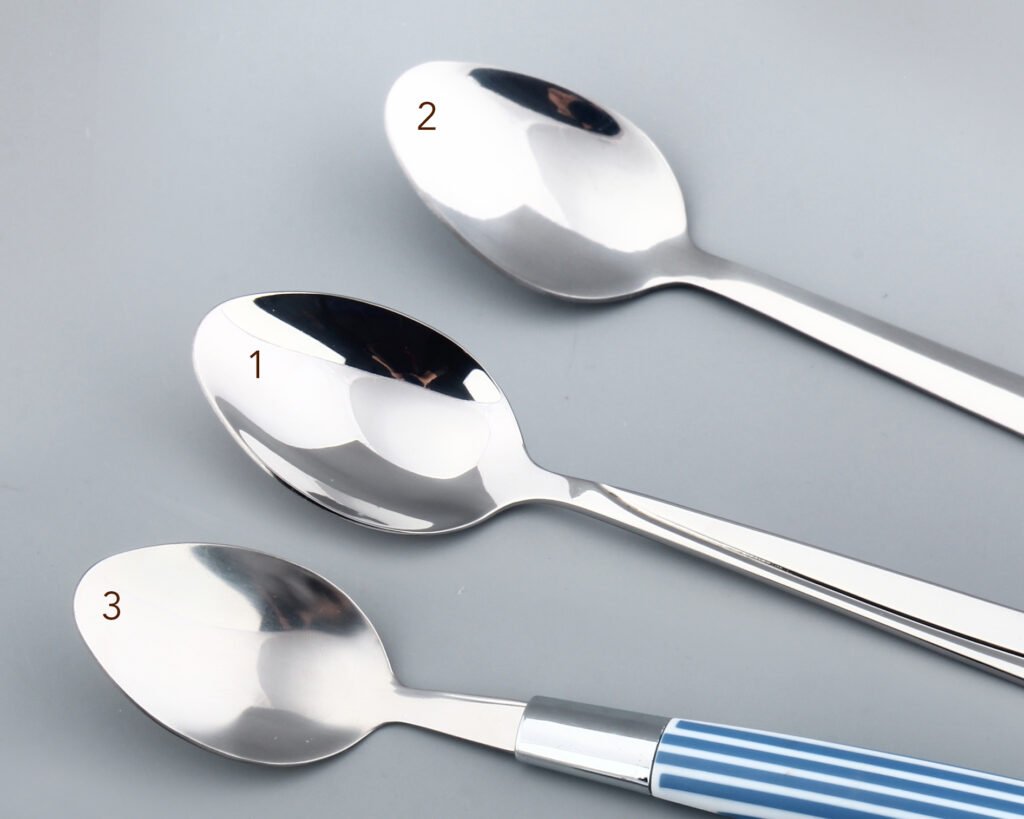
- Picture 2 Mirror polishing
- Picture 3 Matte polishing
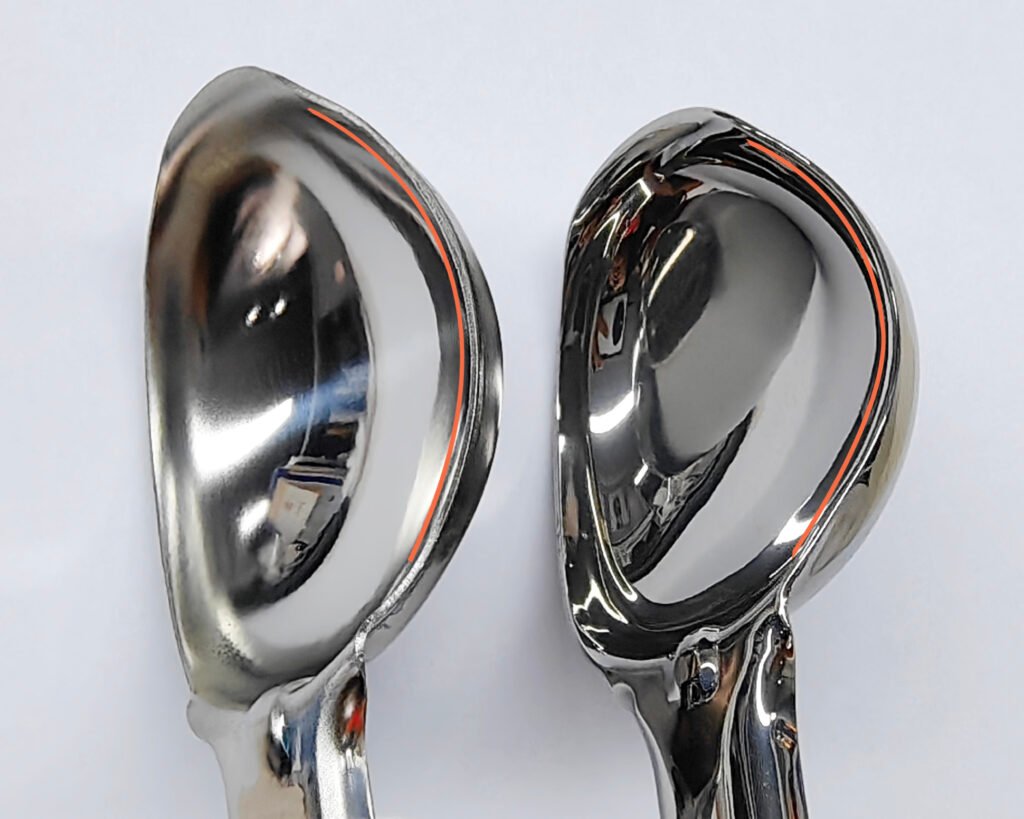
- Picture 4 Edge polishing
Besides the above polishing, there are also other polishing methods such as Electropolishing ( see Pictures 5 and 6), chemical polishing, etc.
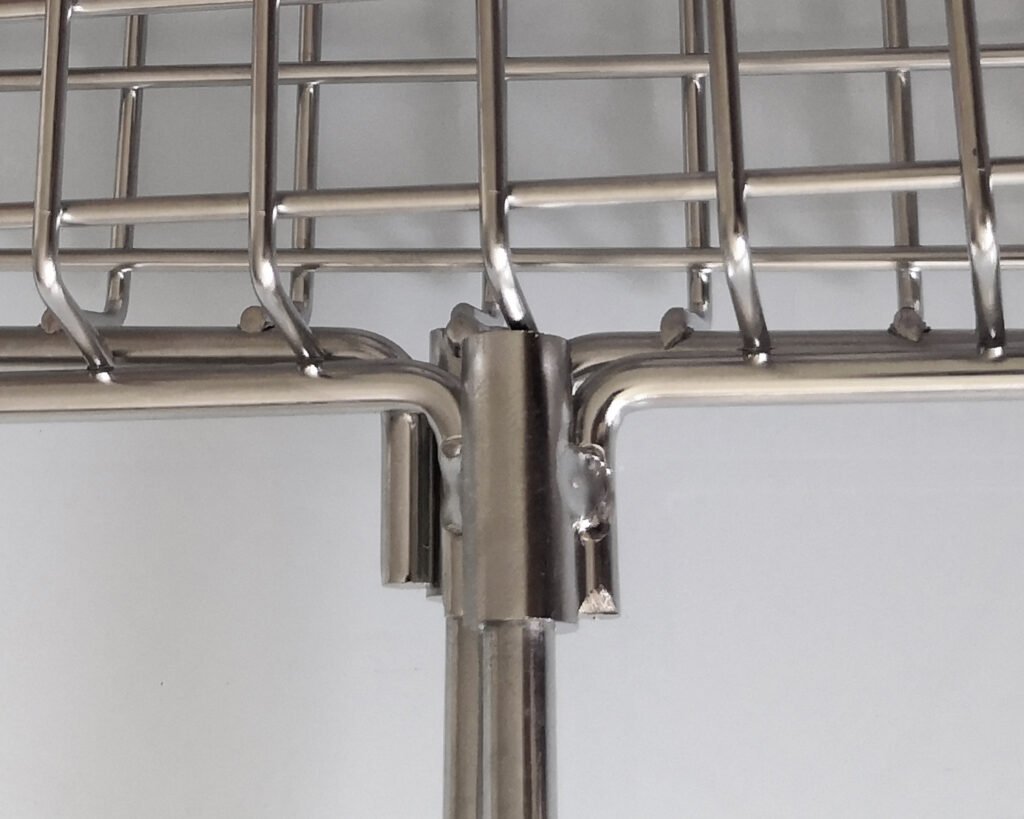
- Picture 5
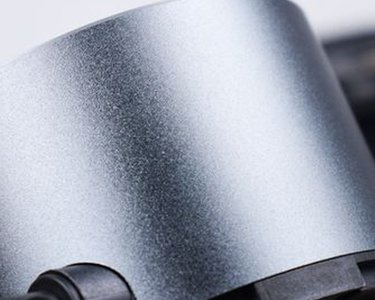
- Picture 6
When choosing suppliers, relying only on prices and images can result in missing out on the best option. To ensure that we make the right decision, it’s essential to request samples and evaluate their quality firsthand. This approach not only protects our investment but also guarantees that we partner with the most suitable suppliers.